SPINEFITMedical
Spine Health7 min read1 March 2025
Lower Back Pain: Causes, Symptoms & Treatment Options in India
Lower back pain affects over 500 million people worldwide. Learn the common causes, warning signs, and evidence-based treatments available in India today.
Why Lower Back Pain Is India's Fastest-Growing Health Problem
Lower back pain (LBP) is now the leading cause of disability globally, affecting an estimated 540 million people at any given time. In India, changing work habits — sedentary desk jobs, long commutes on two-wheelers, and heavy agricultural labour — have driven a sharp increase in prevalence across all age groups.
Common Causes of Lower Back Pain
1. Muscle Strain and Ligament Sprain
The most frequent cause. Sudden lifting, poor posture, or awkward twisting can overstretch muscles and ligaments in the lower back. Pain usually resolves within 4–6 weeks with rest and therapy.
2. Lumbar Disc Disease
Intervertebral discs act as shock absorbers. When the outer ring (annulus fibrosus) tears or the inner gel (nucleus pulposus) herniates, it can press on nearby nerves, causing radiating pain down the leg — a condition called sciatica.
3. Lumbar Spondylosis
Age-related degeneration of the vertebrae and discs. Common after 40, it causes chronic stiffness, reduced range of motion, and sometimes spinal canal narrowing (stenosis).
4. Facet Joint Arthritis
The small joints that link vertebrae can develop arthritis, causing localised pain that worsens with backward bending and prolonged standing.
5. Poor Posture
Prolonged slouching or forward-head posture shifts the spine's centre of gravity, placing up to 3× the normal compressive force on lumbar discs.
Red Flags — When to See a Doctor Immediately
- Pain after significant trauma (fall, accident)
- Numbness or weakness in one or both legs
- Loss of bladder or bowel control
- Pain that is constant, progressive, and not relieved by rest
- Unexplained weight loss alongside back pain
Evidence-Based Treatment Options
Non-Surgical Treatments (First Line)
- Physiotherapy: Targeted strengthening of core and lumbar stabilisers. Most effective long-term approach for mechanical LBP.
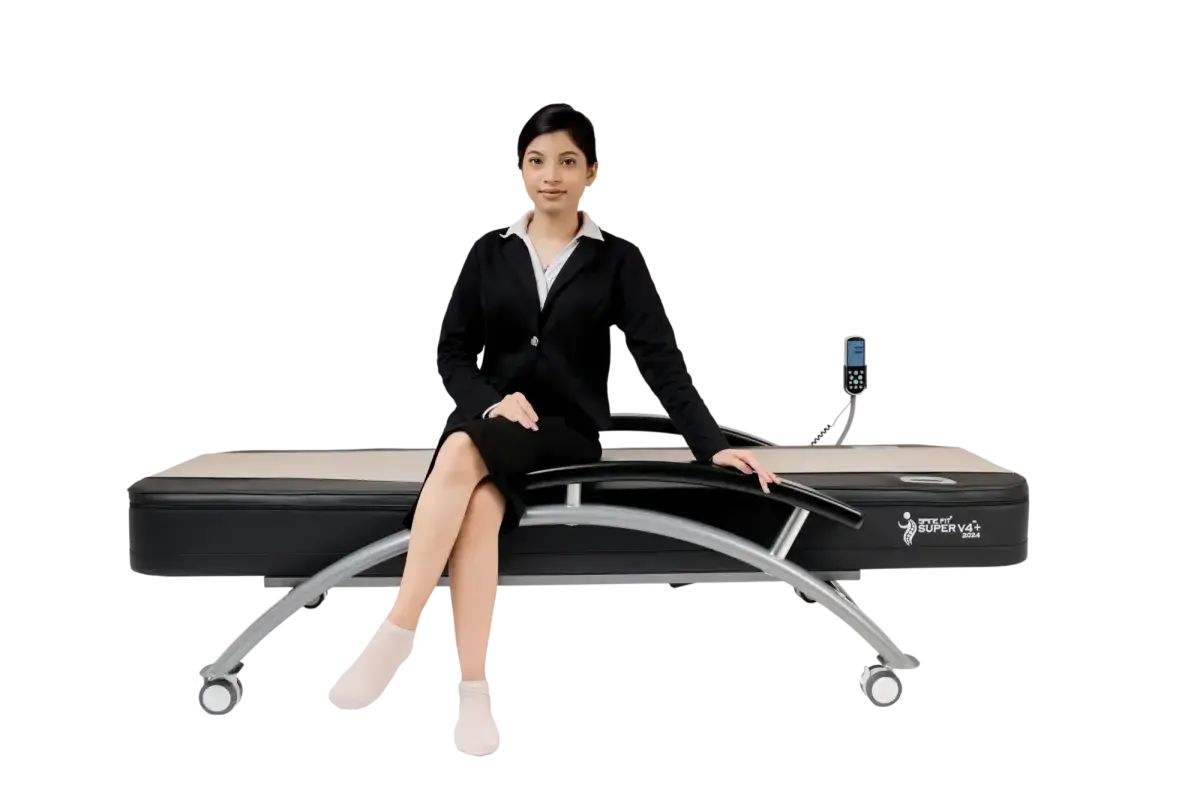
- Far-Infrared Thermal Therapy: Deep heat at 65°C penetrates 4–6 cm into soft tissue, improving circulation, reducing muscle spasm, and accelerating healing. Devices like the SpineFit Master V4+ deliver this clinically.
- Traction / Spinal Decompression: Mechanically stretches the spine, reducing intradiscal pressure and allowing herniated material to retract.
- Medications: NSAIDs (ibuprofen, diclofenac), muscle relaxants, and topical analgesics for acute phases.
Surgical Treatments (Last Resort)
Surgery is recommended for fewer than 10% of LBP patients — only when conservative treatment fails after 6–12 weeks and structural pathology is confirmed on MRI. Common procedures include discectomy, laminectomy, and spinal fusion.
Prevention Strategies
- Maintain a healthy BMI (excess weight increases lumbar load)
- Strengthen core muscles with daily exercises (plank, bird-dog, dead bug)
- Use an ergonomic chair with lumbar support at work
- Avoid sitting for more than 40 minutes without a short walk
- Sleep on a medium-firm mattress with knees slightly bent
lower back painback pain treatmentspine healthIndia
AD
Dr. Abhay Daga
SpineFit Medical