SPINEFITMedical
Lifestyle6 min read1 August 2025
Setting Up an Ergonomic Home Office That Protects Your Spine
Working from home has created a wave of new back and neck pain cases. This is the definitive guide to setting up a home workspace that protects your spine long-term.
The Work-From-Home Spine Crisis
Remote work brought freedom — and back pain. Studies conducted during and after COVID lockdowns consistently found significant increases in musculoskeletal symptoms, particularly neck and lower back pain, among newly remote workers. The main culprits: dining tables at wrong heights, kitchen chairs without lumbar support, laptops below eye level, and longer uninterrupted sitting times without office-walk breaks.
The Ideal Home Office Setup
Chair
- Seat height: Feet flat on floor, thighs parallel to ground, knees at 90°
- Lumbar support: Should fit the natural curve of the lower back — adjustable height is key
- Seat depth: 2–3 finger-widths between the back of your knees and the seat edge
- Armrests: Elbows at 90°, shoulders relaxed (not shrugged)
- Budget option: Add a lumbar roll to any chair — ₹500–₹1,500 and highly effective
Monitor/Screen
- Top of screen at or just below eye level
- 50–70 cm away from eyes
- Raise laptops with a stand; use an external keyboard and mouse
- For dual monitors: primary screen directly ahead; secondary at an angle
Desk Height
Standard desk height (73–75 cm) suits people around 170–175 cm tall. Shorter people benefit from a footrest; taller people may need desk risers or a height-adjustable desk.
Keyboard and Mouse
Should be at elbow height or slightly below. Wrists neutral — not extended upward (common with keyboard too high) or flexed downward. A wrist rest is useful for the mouse but should not be used while actually typing (use it as a resting position only).
The Daily Protocol
- Every 40 minutes: stand, do 5–10 neck circles and shoulder rolls, walk 2 minutes
- Twice daily: 10-minute walk
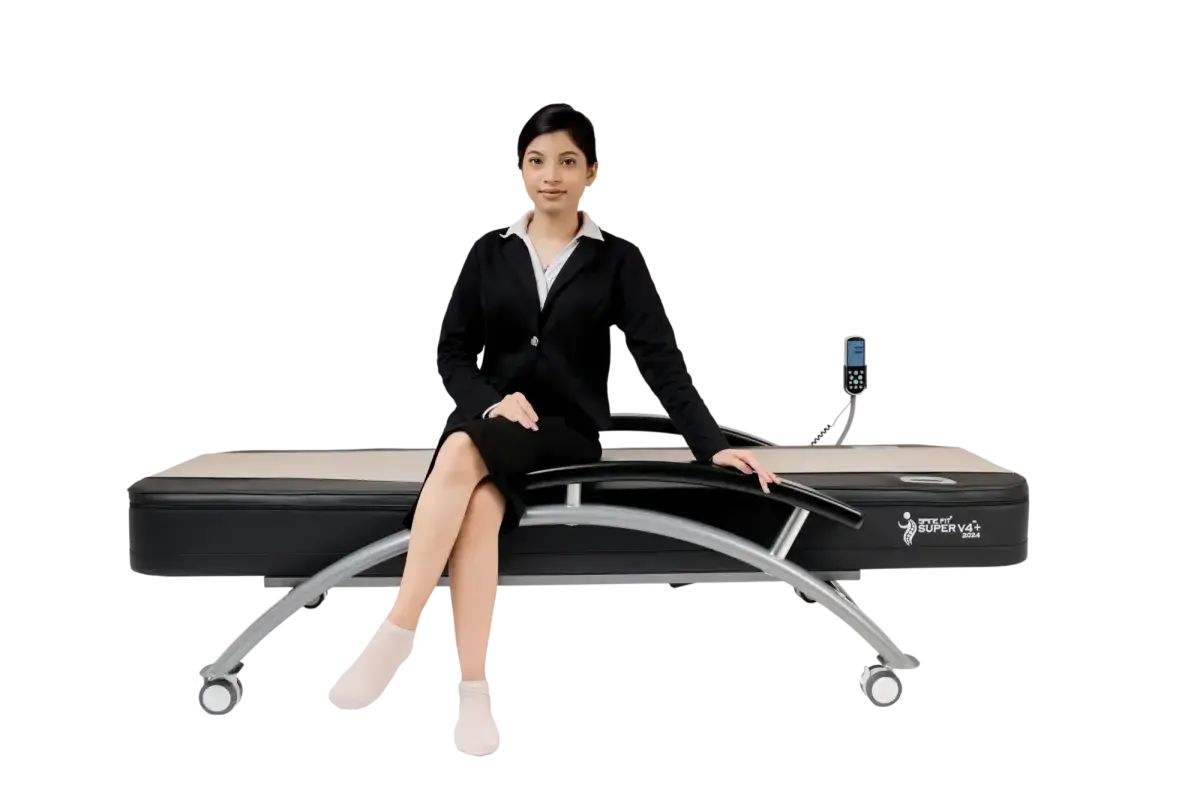
- Evening: 20-minute stretch or SpineFit therapy session to recover the day's compression
Cost-Effective Improvements
| Upgrade | Approximate Cost | Impact |
|---|---|---|
| Lumbar roll | ₹500–1,500 | High |
| Laptop stand | ₹1,000–3,000 | Very high |
| External keyboard + mouse | ₹1,500–4,000 | High |
| Monitor arm | ₹2,000–6,000 | Moderate |
| Height-adjustable desk | ₹15,000–50,000 | High |
ergonomicshome officeWFHdesk setupposture
SM
SpineFit Medical Team
Clinical content team, SpineFit Medical